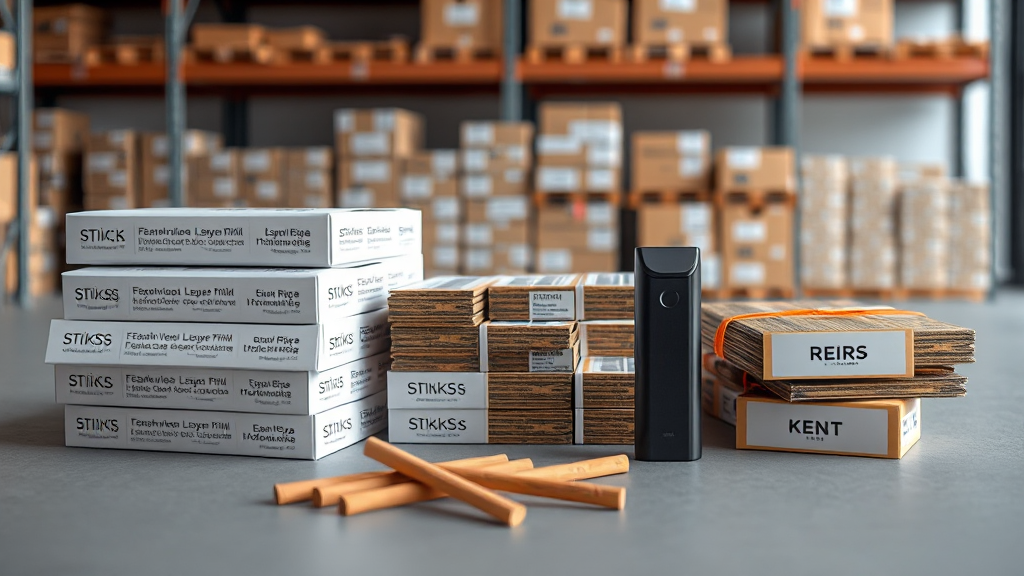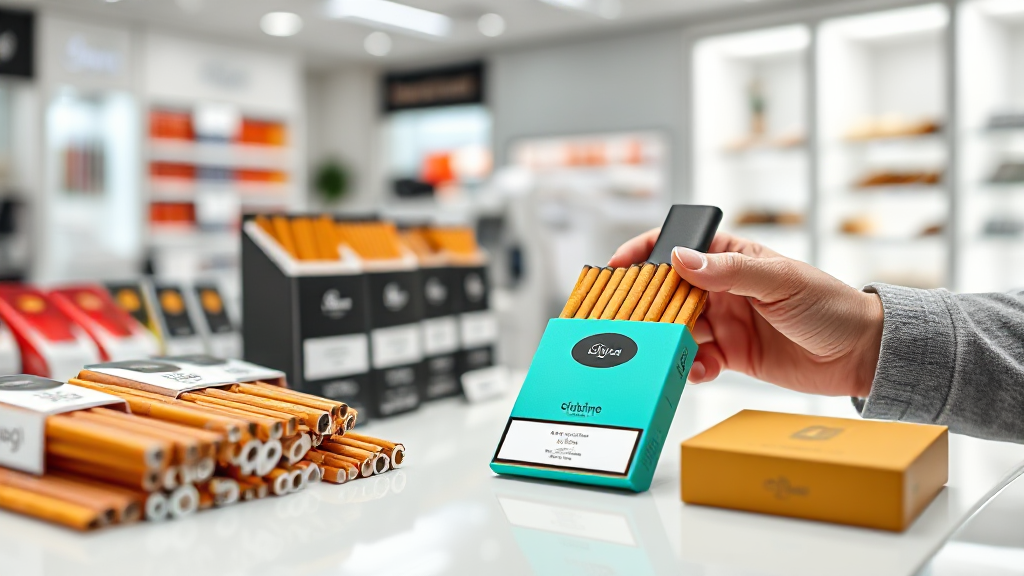
Reading a Heated Tobacco Stick Pack Before You Click Buy
Pick up any pack of heated tobacco sticks and turn it over in your hand. The front panel is doing one job: telling you the brand and the variant. The back, the sides, and the tiny print near the flap are doing an entirely different job. They tell you which device the sticks were engineered for, how much tobacco each stick holds, how the flavour was built, and whether the pack in front of you is the exact product you meant to order. Most online shoppers skip all of it and buy on the front panel alone. That is how people end up with a sleeve of sticks that will not fit the device already sitting on their desk.
This walkthrough is for the buyer who reads before clicking. It breaks a heated tobacco stick pack into five label elements, explains what each one actually communicates, and shows how those elements map onto the way a specialist retailer like Stickhaven organises its catalogue. The goal is simple: by the time you reach the checkout, you should be able to justify every pack in your basket from the label itself, not from a product photo or a guess.
Element One: Device Compatibility Is the First Filter
The single most consequential line on a stick pack is the compatibility statement. Heated tobacco is not a universal format. A stick built for one heating system will not perform correctly in another, because the tobacco plug, the filter, and the wrapper are all dimensioned around a specific heating element and a specific temperature curve. When a pack says it is designed for a particular device family, that is not marketing decoration. It is a mechanical specification.
This is why the naming conventions matter. TEREA sticks are built for the ILUMA generation of devices, which heat from the inside using a coated induction element rather than a blade. FIIT and DELIA sticks belong to the GLO ecosystem and are shaped for a different heating chamber. NEO and Kent sticks sit in their own compatibility lanes again. If you own an ILUMA Prime, an ILUMA One, or a GLO Hil, the compatibility line on the pack is the first thing you should verify, because everything else on the label assumes you have already cleared this hurdle.
A retailer that respects this distinction will separate its catalogue by device family rather than dumping every stick into one grid. That structural choice is itself a signal of whether the shop understands the product. When compatibility is treated as the primary filter, you spend less time reading and more time choosing between flavours you can actually use.
Element Two: Variant Naming, Flavour Codes, and Strength Markers
Once compatibility is confirmed, the next layer is the variant name. Heated tobacco naming is more systematic than it first appears. A pack will usually combine a flavour family with a strength or intensity marker, and sometimes with a capsule indicator. Menthol, for example, is rarely just “menthol” — it may be presented as a crisp variant, a deep variant, or a variant with a crushable capsule that changes the profile mid-stick. The words on the pack are a compressed description of the experience, and they are consistent within a brand line.
Strength markers deserve attention because they are the most common source of mismatched expectations. A stick labelled as a stronger variant typically delivers a more pronounced tobacco body, while a lighter variant leans toward a smoother, more restrained draw. Neither is better; they simply suit different moments. Reading the variant name carefully stops you from ordering a full carton of something that reads well in a description but does not match the intensity you actually want.
Flavour codes and capsule symbols are the other half of this element. A small dot or capsule icon on the pack indicates that the filter contains something you can activate. If you prefer a consistent profile from first puff to last, a capsule stick may not be for you. If you like the option of changing the character partway through, the symbol is your cue. The label tells you this before you spend anything.
Element Three: Pack Format, Count, and the Economics of the Carton
The physical format of the pack is a label element people consistently overlook. Sticks are sold in single packs, multi-packs, and full cartons, and the count per unit varies by brand and region. A carton is not simply “more of the same” — it is a different unit of purchase with its own price-per-stick maths. Reading the count on the label lets you compare true value rather than sticker price.
There is also a practical dimension. Heated tobacco sticks are sensitive to air and moisture once a pack is opened. Buying a larger format only makes sense if you will move through it at a reasonable pace and store the unopened packs properly. A buyer who reads the label can match format to consumption: a single pack for trying a new variant, a multi-pack once a flavour has earned a permanent place, a carton only when the maths and the storage both work.
This is where a well-organised online store earns its keep. Clear pack-format labelling, honest counts, and a straightforward unit breakdown let you compare like with like across brands. The table below sketches how a specialist heated tobacco retailer tends to position itself against the alternatives a buyer might consider.
| Retailer type | Typical price | Cons | Pros |
|---|---|---|---|
| Specialist heated tobacco store (e.g. Stickhaven) | Mid-range, transparent per-pack pricing | Narrower catalogue than a general marketplace; stock depends on brand availability | Device-compatibility filtering, original sticks, fast delivery, clear variant and format labelling |
| General e-commerce marketplace | Variable, often lowest headline price | Mixed sellers, inconsistent authenticity, weak compatibility guidance | Wide range of unrelated goods in one basket |
| Local physical tobacco shop | Higher due to overheads | Limited stock depth, no delivery, restricted opening hours | Immediate possession, face-to-face advice |
| Brand-operated channels | Fixed pricing | Usually limited to one brand family, long shipping windows | Guaranteed authenticity, official device bundles |
Element Four: Warnings, Ingredients, and Regulatory Print
The regulatory block is the least glamorous part of the pack and, for a careful buyer, one of the most informative. Health warnings are mandatory and standardised, so they tell you less about the product itself and more about the market the pack was produced for. The language, the size of the warning, and the accompanying pictograms are all clues to the pack’s intended region. If a listing shows a pack with warnings in a language you did not expect, that is worth a moment’s thought before you order.
Ingredients and manufacturing details sit alongside the warnings. They confirm the product category, identify the manufacturer, and sometimes include batch or production information. For heated tobacco specifically, the ingredient panel reinforces that these are tobacco products intended for use with a compatible heating device, not a food or aromatic product. That distinction matters, and the label makes it explicit.
For an online buyer, the practical takeaway is that regulatory print is a verification tool. A trustworthy listing will show the pack clearly enough that the warnings and manufacturer details are legible. Blurry, cropped, or heavily edited pack images are a small but real warning sign. If the label cannot be read, the authenticity of the product cannot be confirmed from the page.
Element Five: Batch Codes, Freshness, and Storage Signals
The final element is the quietest one: the batch code and any date or production marking stamped on the pack. Heated tobacco is an agricultural product, and freshness affects how a stick performs. A pack that has been stored badly or held in a warehouse for a long time will not deliver the same experience as a fresh one, even if the variant name is identical.
Batch codes let a manufacturer trace a pack through production and distribution. For the buyer, they are less about decoding and more about trusting the supply chain. A retailer that moves stock quickly, stores it correctly, and ships promptly is effectively protecting the freshness of every pack it sells. Fast delivery is not just a convenience feature; it is a freshness feature.
Storage signals also appear on the packaging itself. Instructions about keeping the pack sealed until use, avoiding direct heat, and not refrigerating the sticks are there because the product is sensitive. Reading them is part of getting the most out of what you bought. When you combine this element with the four before it — compatibility, variant, format, and regulatory print — you have a complete picture of a pack before it ever leaves the warehouse.
That is the discipline this walkthrough is asking you to adopt. A heated tobacco stick pack is a dense document. It tells you which device it belongs to, what it will taste like, how strong it will be, how many you are buying, where it was made, and how fresh it is likely to be. Reading those five elements in order turns online ordering from a gamble on a product photo into a decision you can defend. Brands like TEREA, FIIT, DELIA, NEO, and Kent all speak this same labelling language, and once you are fluent in it, the front panel stops being the whole story — and the right pack, from the right retailer, becomes much easier to find.